Immanuel Kant
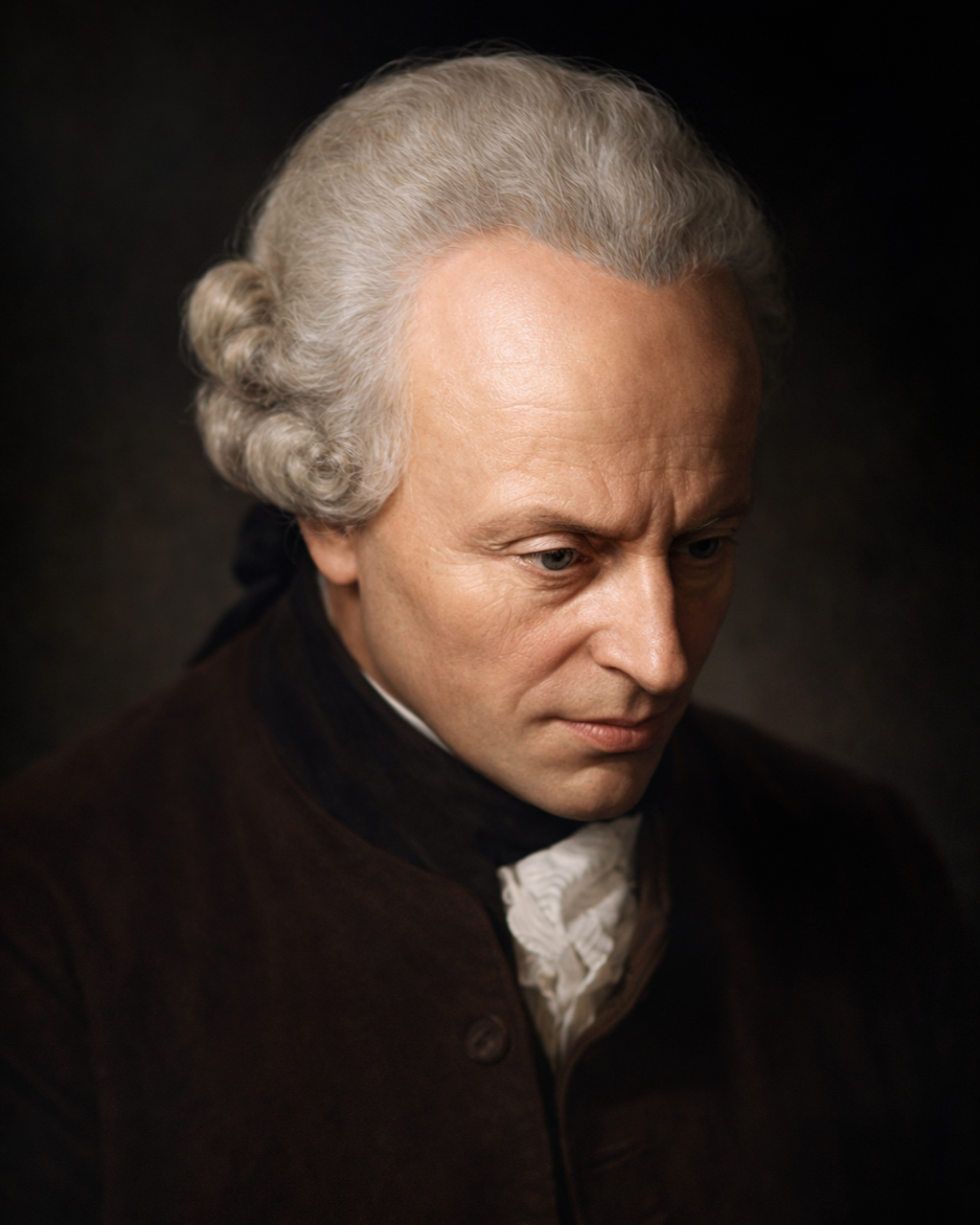
Immanuel Kant (1724–1804), Preußen: Philosoph, der das Denken selbst zum Gegenstand des Denkens machte – und damit eine kopernikanische Wende auslöste, ohne Königsberg je verlassen zu haben. Sein kategorischer Imperativ bot der Vernunft eine Moral ohne Gott; sein transzendentaler Idealismus bewies, dass wir die Welt nicht erkennen, sondern konstruieren – eine Einsicht, die bis heute mehr verstört als beruhigt. (geb./gest. Königsberg)
Immanuel Kant (1724–1804) was a German philosopher of the Enlightenment whose work profoundly shaped modern Western thought. He sought to reconcile rationalism and empiricism, laying the foundations of transcendental idealism and a new approach to ethics and epistemology. His ideas continue to influence philosophy, politics, and moral theory.
Key facts
Born: April 22, 1724, Königsberg, Prussia (now Kaliningrad, Russia)
Died: February 12, 1804, Königsberg, Prussia
Major works: Critique of Pure Reason (1781), Critique of Practical Reason (1788), Critique of Judgment (1790)
Notable ideas: Categorical imperative, transcendental idealism, synthetic a priori knowledge
Era: Enlightenment
Quelle: https://www.kant.uni-mainz.de/ikonographie/gemaelde.html